
How to Merge CSV Files Properly (The Header Is the Problem)
Concatenation gets three things wrong on real files: the repeated header, byte-order marks at every join, and mixed line endings. All three are silent.
Choose text or CSV files. They are joined in order with the repeats and BOMs handled.
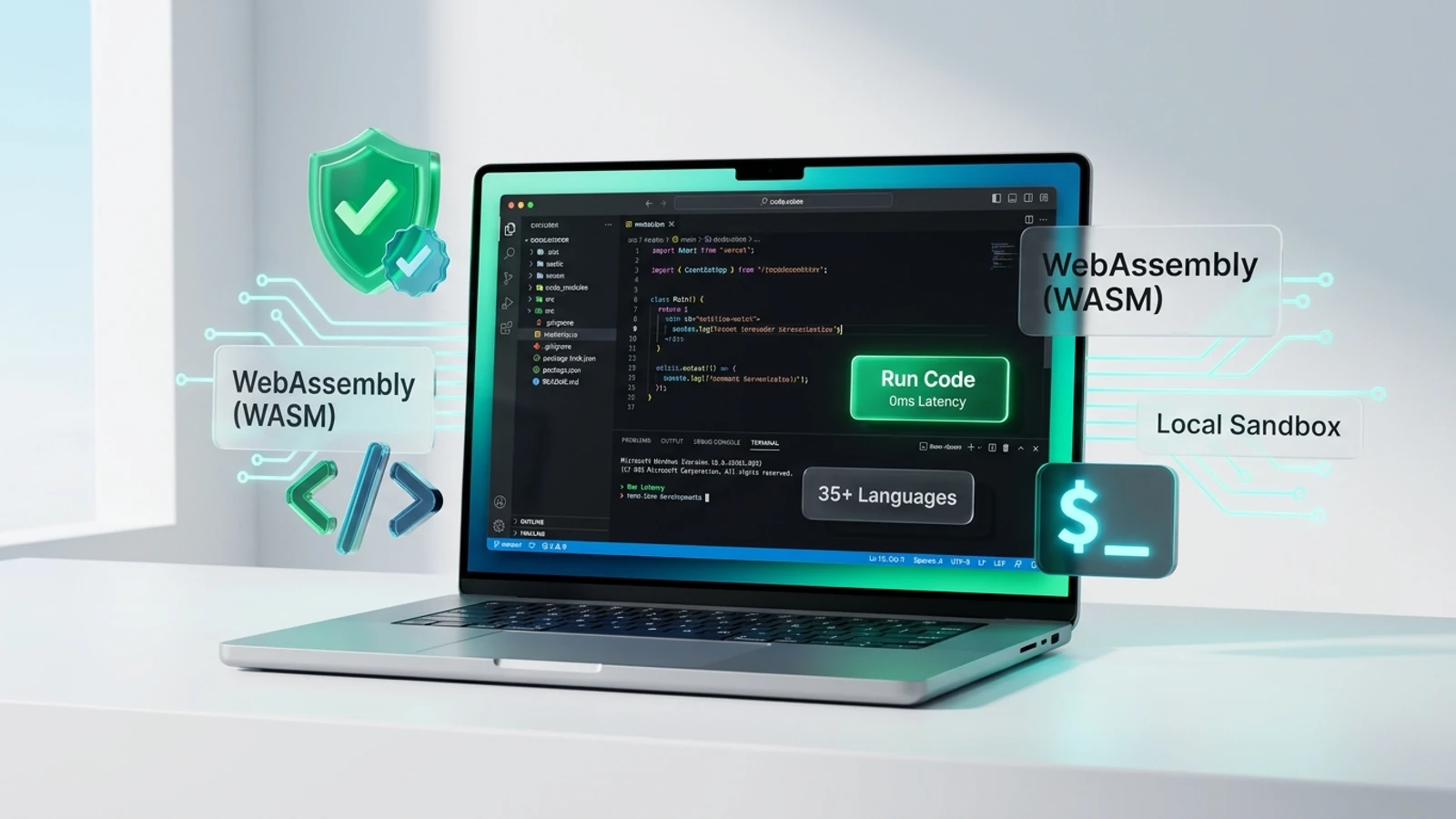
Workflow Lifecycle & Pipeline
Visual execution flow showing how File Merger processes data directly in your local browser sandbox.
File Merger Interactive Process Pipeline
Fast, zero-latency execution directly in your browser memory.
Before You Start
Ensure your source assets and browser environment meet the verified execution requirements.
Step-by-Step Instructions
Follow these verified steps to execute the task with File Merger.
Add your TXT code
Open File Merger and drop up to 50 files onto the page, or pick them from the file dialog. It reads TXT, CSV, JSON, LOG, SQL or MD.
snippet.txtChoose your 3 settings
Output name takes text, Between files put takes one of A newline, A blank line, A ===== filename ===== banner or Nothing and Remove repeated CSV header rows takes on or off. Leave them alone and File Merger uses merged, A newline and on.
Output name merged · Between files put A newline · Remove repeated CSV header rows onPress Merge
Merge starts the work in this tab. Nothing is uploaded, so how long it takes is down to your own device.
MergeFile Merger runs on your deviceDownload the TXT
The result appears with a download button, as TXT or CSV. It was made on your device, so nothing has to be cleaned up afterwards.
Under the Hood: Sandboxed WASM Execution & Isolated Web Workers
Development tools and code sandboxes execute inside sandboxed Web Workers with isolated thread runtimes. Code scripts cannot access DOM scopes, cookies, or local network interfaces, providing high security and bare-metal performance.
Real-Time Stdin Stream
Interactive inputs pipe directly into std::cin, sys.stdin, and ReadLine buffers via simulated virtual teletypes.
Zero Egress Guarantee
Algorithm logic, API keys, and test queries remain confined to the client virtual machine.
Near-Native CPU Performance
Precompiled WebAssembly modules execute with near-native JIT performance on V8 and SpiderMonkey engines.
Settings & Options Explained
Fine-tune quality, format, and compression parameters for your exact workflow.
Settings & Configuration Guide
| Setting | Recommended Value | How It Works & Impact |
|---|---|---|
| Output name | merged | Takes text. Impact: Read as written, so stray spaces and characters count. |
| Between files put | A newline | Takes one of A newline, A blank line, A ===== filename ===== banner or Nothing. Impact: Each option is a different between files put; switching it changes the result, not the speed. |
| Remove repeated CSV header rows | on | Only applies when every file is a CSV and their headers match. Takes on or off. Impact: Left on, which is what the tool does when you change nothing. |
Best Practices & Key Considerations
Avoid common quality pitfalls and maximize output performance.
Expert Recommendations
- The header row buried mid-file is read as data by every tool downstream — a spreadsheet shows a row saying 'id, name', and a parser imports the word 'id' as an id.
- If the headers do NOT match, the files have different columns and merging them produces rows whose fields do not line up. The tool says so instead of merging quietly.
- A BOM is three invisible bytes at the start of a file. Merge ten and you get nine invisible characters scattered through the result, each corrupting the first field of a row.
- Binary files are refused on purpose. Two MP4s concatenated are not a video — every container has a header describing the whole file and usually an index, and a second copy invalidates both.
- Worse than failing: a concatenated MP4 often opens and plays only the first file, which looks like it worked.
- Files merge in the order the browser hands them over, which is not numeric order — part10 may land between part1 and part2. The order used is listed in the output.
Common Mistakes to Avoid
- Giving it a format it does not read — TXT, CSV, JSON, LOG, SQL or MD are the ones it takes.
- Queueing more than 50 files in a single run.
- Leaving Between files put on A newline when A blank line or A ===== filename ===== banner was wanted.
- Not noticing that Remove repeated CSV header rows starts on.
Troubleshooting & Fixes
Quick solutions for common browser constraints, format issues, and edge cases.
Troubleshooting & Common Issues
File Merger will not accept the file
Possible Cause: File Merger reads TXT, CSV, JSON, LOG, SQL or MD and nothing else.
Some of the files are missing from the result
Possible Cause: File Merger takes up to 50 files in one run, and anything past that is not picked up.
Frequently Asked Questions
Everything you need to know about formats, privacy, and browser support.
Related Step-by-Step Guides
Explore companion workflows, optimization techniques, and verified tutorials.