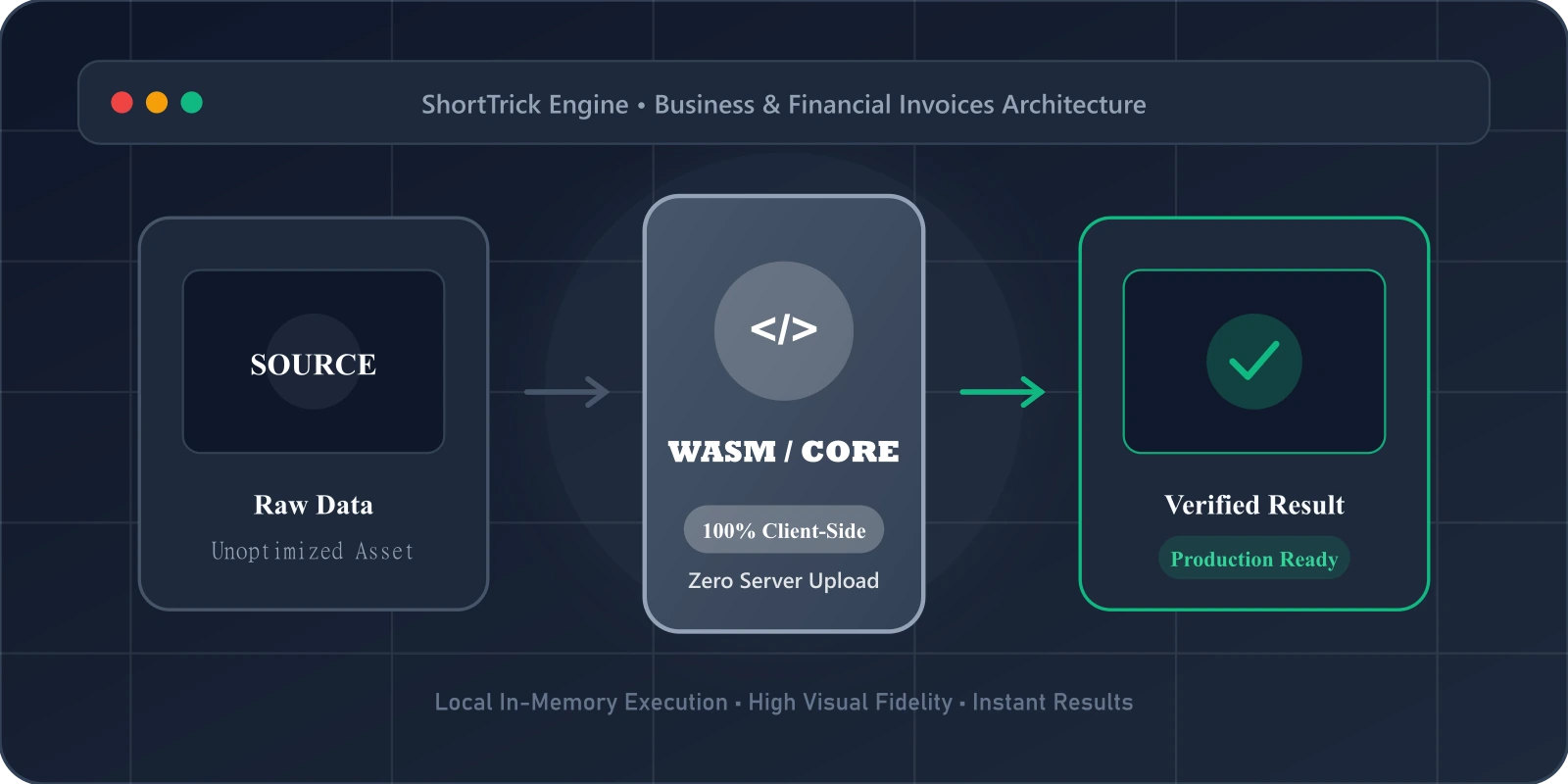
About IP Address Lookup — Free Online Tool
IP Address Lookup classifies any IPv4 address against the IANA registry and does a real reverse DNS lookup, which usually names the hosting provider or ISP that controls it.
Validates strictly, rejects leading zeros, classifies against the special-purpose registry, and queries the in-addr.arpa PTR record for globally routable addresses only.
The address is sent to our server, which queries public DNS. Nothing is stored.
Identifying who owns an address in a server log, checking whether a range is private, understanding why mail from an address is rejected, and working out the enclosing /24.
Also known as: ip lookup · reverse dns lookup · ptr record lookup · whois ip · check ip address · private ip checker
When to use it
Because an address in a log is meaningless on its own, and the PTR record is the one piece of identifying information about it that is a published fact rather than a guess.
How it works
The address is validated and classified against the IANA special-purpose registry. For a globally routable address, the PTR record at d.c.b.a.in-addr.arpa is queried.
Reserved Ranges Explain A Lot Of Mysteries
An address in 169.254.0.0/16 means DHCP failed and the machine gave itself an address — it never got one from the network. 100.64.0.0/10 is carrier NAT. 10.x, 172.16–31.x and 192.168.x are private and cannot appear as a source on the public internet, so one showing up in a web server log means a proxy is passing it through. Each of these turns an unexplained symptom into a one-line diagnosis.
A Missing PTR Is Why Your Mail Is Rejected
Most receiving mail servers check that the connecting address has a reverse DNS name, and many reject outright when it has none. Cloud instances ship without a PTR by default, which is the single most common reason mail sent directly from a new VPS disappears. Setting it is usually a field in the provider’s console — and it has to match the name the server announces in HELO for the check to be worth anything.
Leading Zeros Are Rejected On Purpose
Some libraries read 010.1.1.1 as octal — 8.1.1.1 — and others read it as decimal 10.1.1.1. That disagreement has been used to slip addresses past allowlists for years. The validator here refuses an octet with a leading zero rather than picking an interpretation, because either choice would be wrong somewhere.
No City, And That Is Deliberate
Geolocation is not shown. It requires a commercial database rebuilt as blocks move, and a stale copy is wrong often enough — especially on mobile and for VPN exits — that a confident answer would mislead more than it helped. Reverse DNS gives you the network, which is both verifiable and usually the thing you actually wanted.
How to Use IP Address Lookup in 4 Easy Steps
Follow this simple guide to process your files in seconds directly inside your browser tab.
Enter Target Input for IP Address Lookup
Provide your target URL, content, or metadata into IP Address Lookup. An inspector for a single IPv4 address: what kind of address it is, whether it is routable, and what name its controller publishes for it in reverse DNS.
Set Optimization Parameters
Configure inspection criteria, device viewports, or crawler standards. Because an address in a log is meaningless on its own, and the PTR record is the one piece of identifying information about it that is a published fact rather than a guess.
Execute Diagnostic Evaluation
The IP Address Lookup audit engine runs with real-time feedback and structured diagnostic scoring.
Review Audit Recommendations
Inspect the actionable recommendations, copy generated schema or tags, and export diagnostic reports.
Why Use IP Address Lookup on ShortTrick
Engineered for maximum speed, strict privacy, and frictionless digital productivity.
Audited From Our Server
The page is requested by our server, so the site you audit sees that request rather than you. Your address and cookies are never forwarded, and the URL is not kept.
Instant Protocol Evaluation
IP Address Lookup evaluates tags and generates search-compliant markup in real time.
Google & Schema.org Compliant
IP Address Lookup outputs match official Google Search Central and RFC 9309 crawler standards.
SERP & Snippet Simulation
Simulates visual desktop and mobile search snippets accurately.
Frequently Asked Questions About IP Address Lookup
Common questions regarding IP Address Lookup, data privacy, file format compatibility, and usage limits.
Popular Searches & Related Tasks for IP Address Lookup
Common search phrases, secondary format tasks, and workflows users reach for when using this tool.
Direct Variations & Search Synonyms (8)
Specific Workflows & Long-Tail Queries (15)
Semantic Standards & Technical Entities (20)
A, AAAA, CNAME, MX, TXT and NS
A domain is a set of records, each answering a different question about where something lives. Most of the trouble people have comes from one rule that is easy to miss: a CNAME cannot sit beside anything else at the same name, which is why pointing a bare domain at a hosting provider so often fails.
| Record | Points to | Used for | Can sit at the bare domain |
|---|---|---|---|
| A | An IPv4 address | The website | Yes |
| AAAA | An IPv6 address | The website | Yes |
| CNAME | Another name | Aliases, www, CDNs | No |
| MX | A mail server, with priority | Receiving email | Yes |
| TXT | Free text | SPF, DKIM, DMARC, verification | Yes |
| NS | The authoritative servers | Delegating the zone | Yes |
In practice: A CNAME has to be the only record at its name, and the bare domain always carries NS and usually MX, so a CNAME can never go there. Providers work around this with an ALIAS or flattened CNAME that behaves like an A record. The other thing worth knowing is the TTL: a change takes up to that many seconds to spread, so lowering it a day before a migration is what makes the migration itself quick.
Related SEO & Webmaster Tools & Popular Utilities
Explore complementary browser-based tools with zero file uploads and instant in-memory execution.
More SEO & Webmaster Tools
Popular Tools Across Other Categories
Related Reading & Tutorials
Guides, articles, and best practices for seo & webmaster workflows.

How to Look Up an IP Address (Without Pretending to Know the City)
What Is My IP Address, and Why Port Forwarding Fails
How to Extract Email Addresses from Text (Including Obfuscated Ones)