Ready to Execute
Click the blue ▶ Run button in the header bar or press Ctrl + Enter to compile and preview your results.
About User Agent Parser — Free Online Tool
User Agent Parser breaks a user-agent string into browser, engine, operating system and device — and is explicit that the string is a claim the client makes, not a measurement.
Tests the more specific claim before the generic one it impersonates, so Edge is not read as Chrome and Chrome is not read as Safari. Flags the cases where the string genuinely cannot distinguish two things.
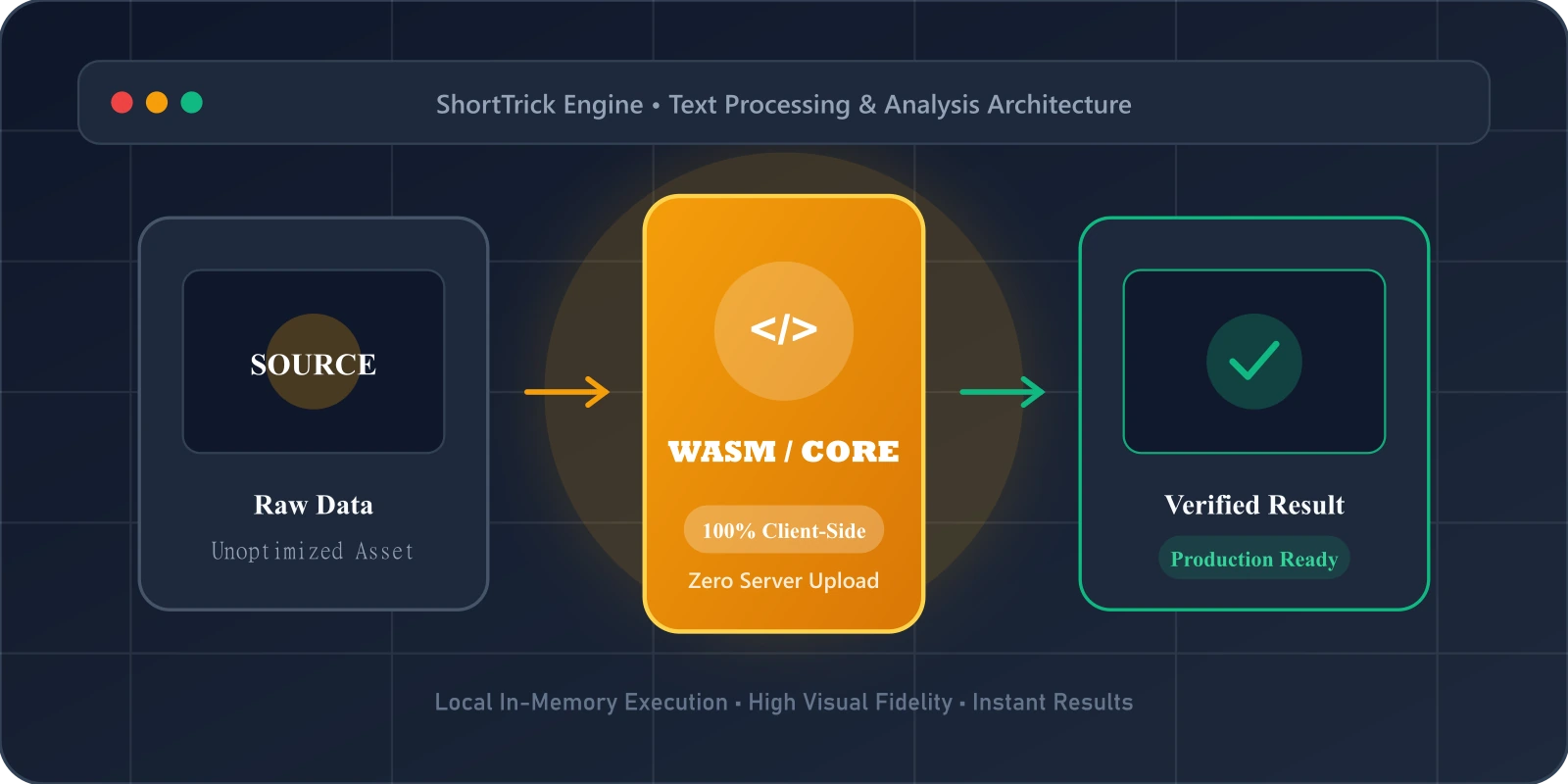
Parsing is pure string work in this tab. Nothing is uploaded.
Reading a server log, debugging a device-specific bug report, checking what a string will be detected as, and understanding why browser sniffing goes wrong.
Also known as: user agent checker · parse user agent · browser detection · ua parser · my user agent
When to use it
Because the string is a thicket of deliberate misstatements inherited from the 1990s, and reading it naively gives the wrong answer in several very common cases.
How it works
The more specific claim is tested first. Edge contains "Chrome" and Chrome contains "Safari", so checking for Safari first would mislabel both.
Every Browser Lies, By Design
Chrome’s string begins "Mozilla/5.0" and contains "AppleWebKit", "KHTML, like Gecko" and "Safari". None of those is true in any useful sense. They are compatibility claims accumulated so that servers written for one browser would serve the next one, and they are now permanent. The practical consequence: a check for "Safari" matches Chrome, a check for "Chrome" matches Edge, and both have shipped to production more times than anyone would like.
On iOS Every Browser Is Safari
Apple requires every browser on iOS to use the system WebKit engine. Chrome, Firefox and Edge on an iPhone are different interfaces around the same renderer, so a CSS bug in iOS Safari is present in all of them. The user-agent names the interface; it tells you nothing about rendering, which is why "it works in Chrome on my phone" means nothing on iOS.
Windows 11 Says It Is Windows 10
Both report "Windows NT 10.0". Microsoft did not increment it, so the two genuinely cannot be distinguished from the user-agent string. Anything claiming to tell them apart is either using the User-Agent Client Hints API — a separate mechanism needing explicit opt-in — or guessing.
Detect Features, Not Browsers
The string says what a client calls itself. It does not say whether that client supports a feature, which is what you actually need — a user may have disabled something, an in-app webview may lack it, and a version table is out of date the week it is written. Testing the feature directly is both shorter and correct, and the Browser Information Checker does exactly that.
How to Use User Agent Parser in 4 Easy Steps
Follow this simple guide to process your files in seconds directly inside your browser tab.
Provide Input for User Agent Parser
Paste your payload, code snippet, or string into the User Agent Parser editor workspace. A parser for the User-Agent header a browser sends with every request, which names the browser, its engine, the operating system and the device class.
Configure Formatting & Validation Rules
Select indentation preferences, minification, encoding options, or validation rules. Because the string is a thicket of deliberate misstatements inherited from the 1990s, and reading it naively gives the wrong answer in several very common cases.
Run In-Browser Engine
The engine executes User Agent Parser locally in your browser with microsecond latency and zero server transmission.
Copy or Download Output
Copy the sanitized, formatted, or generated output directly to your clipboard or download it for your project.
Why Use User Agent Parser on ShortTrick
Engineered for maximum speed, strict privacy, and frictionless digital productivity.
Zero Code or Token Leaks
Proprietary source code, API keys, database queries, and tokens processed in User Agent Parser never leave your browser.
Microsecond Performance
Optimized AST parsers and Web Crypto APIs process large payloads in User Agent Parser in milliseconds.
Syntax Validation & Formatting
User Agent Parser highlights syntax errors and enforces standard formatting conventions automatically.
Offline Ready
Once loaded, User Agent Parser functions entirely offline without requiring an active internet connection.
Frequently Asked Questions About User Agent Parser
Common questions regarding User Agent Parser, data privacy, file format compatibility, and usage limits.
Popular Searches & Related Tasks for User Agent Parser
Common search phrases, secondary format tasks, and workflows users reach for when using this tool.
Direct Variations & Search Synonyms (8)
Specific Workflows & Long-Tail Queries (15)
Semantic Standards & Technical Entities (20)
User Agent Parser compared with the closest alternatives
Only the specifications that actually differ between these 4 tools. Anything identical across all of them is left out rather than printed four times.
| User Agent Parser | URL Parser & Query Inspector | HTTP Header Parser | JSON Formatter & Beautifier | |
|---|---|---|---|---|
| Accepts | TXT | TXT | TXT | JSON, TXT |
| Returns | TXT | TXT, JSON | TXT | JSON |
Related Developer Tools Tools & Popular Utilities
Explore complementary browser-based tools with zero file uploads and instant in-memory execution.
More Developer Tools Tools
Popular Tools Across Other Categories
Related Reading & Tutorials
Guides, articles, and best practices for developer tools workflows.
How to Read a User Agent String (Every Browser Lies)