
Printing Double-Sided Flashcards The Right Way Round
Flashcards are among the best-evidenced study tools there are, and the only genuinely hard part of making them is physical: getting each answer to land on the back of its own question when the sheet goes through the printer twice.
One card per line as front, separator, back. The backs are mirrored for you; print double-sided flipping on the long edge.
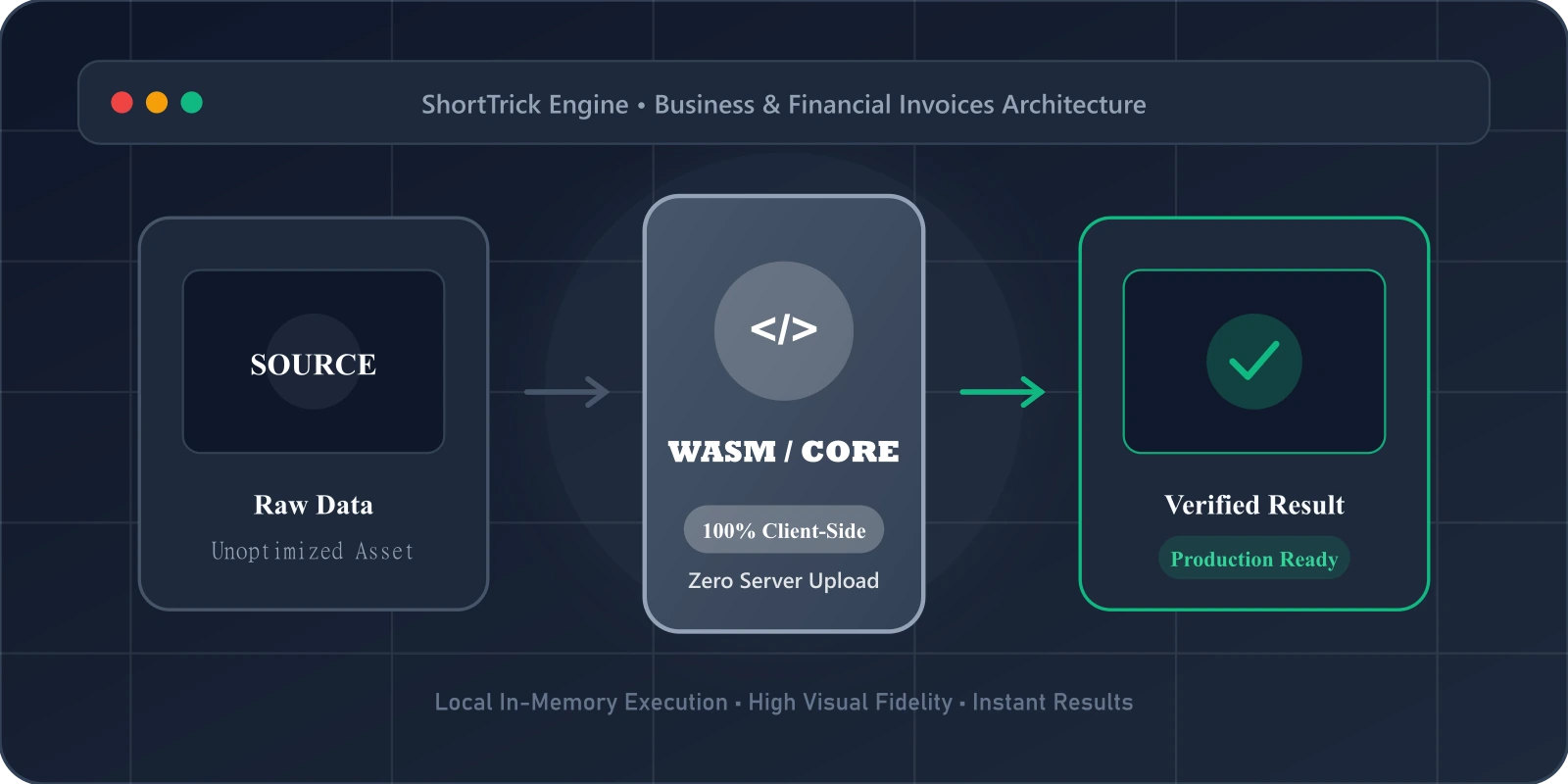
Workflow Lifecycle & Pipeline
Visual execution flow showing how Flashcard Maker processes data directly in your local browser sandbox.
Flashcard Maker Interactive Process Pipeline
Fast, zero-latency execution directly in your browser memory.
Before You Start
Ensure your source assets and browser environment meet the verified execution requirements.
Step-by-Step Instructions
Follow these verified steps to execute the task with Flashcard Maker.
Paste your cards — front, then the separator, then back
Type or paste into the cards — front, then the separator, then back box on the page. Flashcard Maker works on what is in it — there is no file to choose.
bonjour | hello ⏎ merci | thank you ⏎ au revoir | goodbyeCards — front, then the separator, then back read as you typeChoose your 4 settings
Separator between front and back takes text, Cards per page takes one of 2, 4, 6 or 8 and Mirror the backs for double-sided printing takes on or off. 1 more sit below. Leave them alone and Flashcard Maker uses |, 8 and on.
Separator between front and back | · Cards per page 8 · Mirror the backs for double-sided printing onPress Make the Cards
Make the Cards starts the work in this tab. Nothing is uploaded, so how long it takes is down to your own device.
Make the CardsFlashcard Maker runs on your deviceDownload the PDF
The result appears with a download button, as PDF. It was made on your device, so nothing has to be cleaned up afterwards.
Under the Hood: In-Browser Algorithmic Computation
Every operation in this utility executes locally in your browser session using high-speed algorithmic transformations. Data inputs are immediately processed in volatile client memory and rendered to screen in sub-millisecond execution cycles.
Immediate Real-Time Computation
Zero server roundtrips guarantee sub-millisecond responsiveness with instant feedback.
Full Data Sovereignty
Your proprietary inputs, calculations, and conversions never travel across public networks.
Offline Capable Execution
Once loaded, the engine works seamlessly even during complete network disconnections.
Settings & Options Explained
Fine-tune quality, format, and compression parameters for your exact workflow.
Settings & Configuration Guide
| Setting | Recommended Value | How It Works & Impact |
|---|---|---|
| Separator between front and back | | | Takes text. Impact: Read as written, so stray spaces and characters count. |
| Cards per page | 8 | Takes one of 2, 4, 6 or 8. Impact: Each option is a different cards per page; switching it changes the result, not the speed. |
| Mirror the backs for double-sided printing | on | On: flip on the LONG edge. Off: for printing single-sided. Takes on or off. Impact: Left on, which is what the tool does when you change nothing. |
| Shuffle the order | off | Takes on or off. Impact: Left off, which is what the tool does when you change nothing. |
Best Practices & Key Considerations
Avoid common quality pitfalls and maximize output performance.
Expert Recommendations
- Mirroring plus a long-edge flip is the combination that works. When a sheet flips on its long edge, the leftmost column becomes the rightmost on the reverse — so a mirrored back lands behind the right front. Flip on the short edge instead and every answer is upside down behind the wrong question.
- Print at 100%. Scaling applies independently to each pass through the printer, so "fit to page" is what makes fronts and backs drift apart even when the mirroring is correct.
- The split happens at the FIRST separator only, so "merci | thank you | thanks" gives a front of "merci" and a back of "thank you | thanks". Change the separator if your own text already uses a vertical bar.
- If a card's text has shrunk a long way, that is a signal rather than a formatting problem: the card is trying to hold a paragraph. Flashcards work because one card asks one thing, and splitting it into two cards is almost always the fix.
- Turn mirroring off when you are printing single-sided and cutting the pages apart, or folding each card over. With it off, fronts and backs stay in the same column order, which is what a fold needs.
Common Mistakes to Avoid
- Leaving Cards per page on 8 when 2 or 4 was wanted.
- Not noticing that Mirror the backs for double-sided printing starts on.
- Assuming the input is sent somewhere — Flashcard Maker runs in this tab, and nothing you enter leaves it.
Troubleshooting & Fixes
Quick solutions for common browser constraints, format issues, and edge cases.
Troubleshooting & Common Issues
The answer is right but not in the form you wanted
Possible Cause: Cards per page is set to 8, and it decides that.
Pressing the button does nothing
Possible Cause: Flashcard Maker has nothing to work on until the input is filled.
Frequently Asked Questions
Everything you need to know about formats, privacy, and browser support.
Related Step-by-Step Guides
Explore companion workflows, optimization techniques, and verified tutorials.