
Ready to Execute
Click the blue ▶ Run button in the header bar or press Ctrl + Enter to compile and preview your results.
About SQL Query Analyzer — Free Online Tool
SQL Query Analyzer reads a statement and reports the patterns that cause wrong results or slow plans. It does NOT execute anything — a browser has no database, and the page says so rather than implying otherwise.
Strips string literals and comments before scanning so keywords inside them cannot match, then checks fifteen known patterns and reports each with a severity.
The query is parsed inside this page. It embeds your table and column names, so none of it is transmitted.
Reviewing a query before it runs against production, catching a missing WHERE, understanding why an index is not being used, and explaining a NOT IN that returns nothing.
Also known as: sql query tester · check sql query
When to use it
Because the expensive SQL mistakes are not syntax errors — the database accepts them happily and does the wrong thing, or the right thing very slowly.
How it works
String literals and comments are blanked so keywords inside them cannot match, the statement type and tables are identified, and fifteen patterns are checked.
It Does Not Run The Query
Executing SQL needs a database, and a browser does not have one. So nothing here touches your data, and equally, nothing here can tell you what your query returns or how long it takes. It reads the text. That limitation is stated in the tool’s name and its first note because the alternative — implying execution — would be the kind of claim that gets someone to paste a production credential into a web page.
The Two That Return Wrong Answers Silently
NOT IN with a subquery returns NO ROWS AT ALL if the subquery produces a single NULL. That is correct three-valued logic and it is the most surprising behaviour in SQL; NOT EXISTS does what you meant. And a comparison to NULL with = or <> is always UNKNOWN, never true, so `WHERE deleted_at = NULL` matches nothing — silently, with no error. Both of these are accepted by every database and both quietly produce an empty result that looks like legitimately having no data.
Why Your Index Is Not Being Used
Two patterns account for most of it. A LIKE pattern starting with % cannot use a B-tree index, because the index is ordered by the start of the value and the start is exactly what the pattern leaves open. And a function wrapped around a column — YEAR(created_at) = 2026 — makes the index unusable, because the index stores the column’s values, not the function’s results. The rewrite is a range: created_at >= ‘2026-01-01’ AND created_at < ‘2027-01-01’, which uses the index and means the same thing.
EXPLAIN Is Still The Answer For Performance
Nothing readable from a statement’s text can tell you its cost. Row counts, index selectivity, table statistics and the planner’s own estimates decide the plan, and none of them is in the query. This tool catches the patterns that are nearly always wrong regardless of data; for anything else there is no substitute for EXPLAIN, or better EXPLAIN ANALYZE, on your own database with your own data volume.
How to Use SQL Query Analyzer in 4 Easy Steps
Follow this simple guide to process your files in seconds directly inside your browser tab.
Provide Input for SQL Query Analyzer
Paste your payload, code snippet, or string into the SQL Query Analyzer editor workspace. A static reader for a SQL statement that reports the patterns known to produce wrong answers or slow execution plans.
Configure Formatting & Validation Rules
Select indentation preferences, minification, encoding options, or validation rules. Because the expensive SQL mistakes are not syntax errors — the database accepts them happily and does the wrong thing, or the right thing very slowly.
Run In-Browser Engine
The engine executes SQL Query Analyzer locally in your browser with microsecond latency and zero server transmission.
Copy or Download Output
Copy the sanitized, formatted, or generated output directly to your clipboard or download it for your project.
Why Use SQL Query Analyzer on ShortTrick
Engineered for maximum speed, strict privacy, and frictionless digital productivity.
Zero Code or Token Leaks
Proprietary source code, API keys, database queries, and tokens processed in SQL Query Analyzer never leave your browser.
Microsecond Performance
Optimized AST parsers and Web Crypto APIs process large payloads in SQL Query Analyzer in milliseconds.
Syntax Validation & Formatting
SQL Query Analyzer highlights syntax errors and enforces standard formatting conventions automatically.
Offline Ready
Once loaded, SQL Query Analyzer functions entirely offline without requiring an active internet connection.
Frequently Asked Questions About SQL Query Analyzer
Common questions regarding SQL Query Analyzer, data privacy, file format compatibility, and usage limits.
Popular Searches & Related Tasks for SQL Query Analyzer
Common search phrases, secondary format tasks, and workflows users reach for when using this tool.
Direct Variations & Search Synonyms (8)
Specific Workflows & Long-Tail Queries (15)
Semantic Standards & Technical Entities (20)
SQL Query Analyzer compared with the closest alternatives
Only the specifications that actually differ between these 4 tools. Anything identical across all of them is left out rather than printed four times.
| SQL Query Analyzer | SQL Formatter | SQL Minifier | JSON Formatter & Beautifier | |
|---|---|---|---|---|
| Accepts | SQL, TXT | SQL, TXT | SQL, TXT | JSON, TXT |
| Returns | TXT | SQL | SQL | JSON |
Related Developer Tools Tools & Popular Utilities
Explore complementary browser-based tools with zero file uploads and instant in-memory execution.
More Developer Tools Tools
Popular Tools Across Other Categories
Related Reading & Tutorials
Guides, articles, and best practices for developer tools workflows.
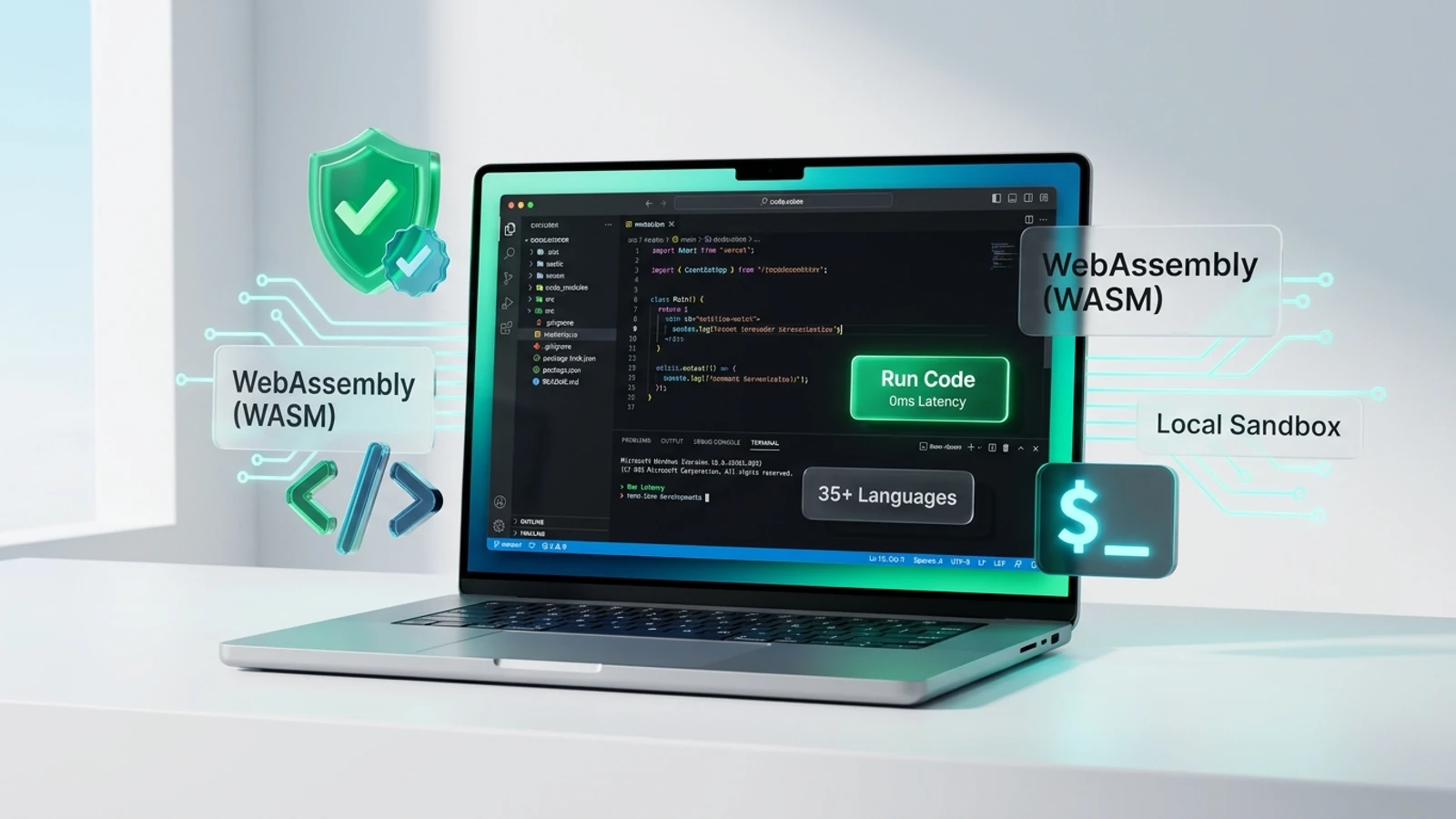
SQL Traps That Return the Wrong Answer Silently

How to Use AI SQL Generator Online: Step-by-Step Guide
How to Use SQL Formatter Online: Step-by-Step Guide
How to Use SQL Minifier Online: Step-by-Step Guide
